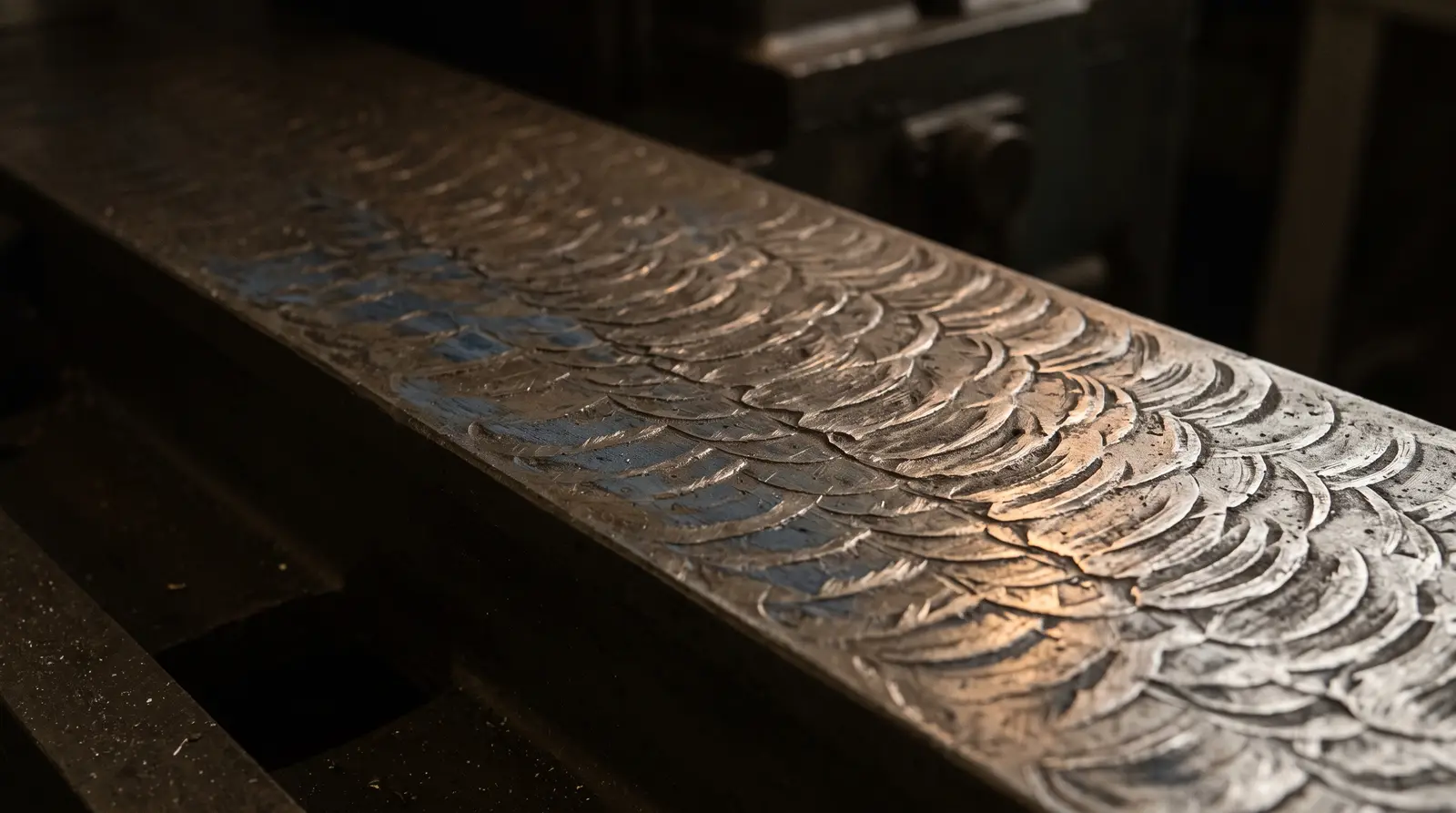
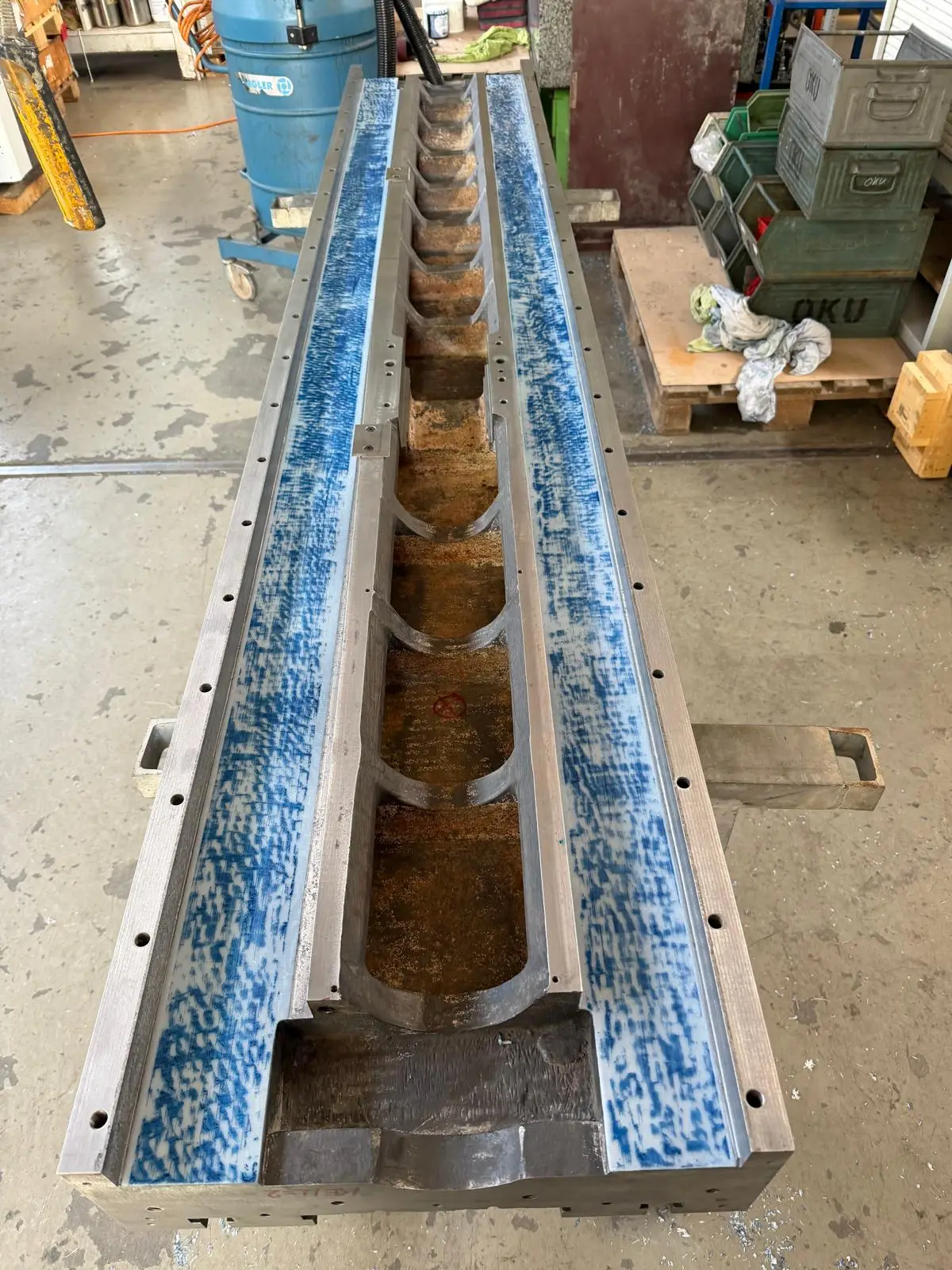
The way stays in the machine. The spotting shows where to scrape.
I repair beds, saddles and rotary tables on surface and cylindrical grinders, milling machines and lathes. I measure before the work and after it, with the same gauges at the same points.
I repair the way where it runs: in the installed machine, with the saddle that will travel on it afterward. There is no teardown and no shipping, and no realigning after reinstallation either. If the bed is already out of the machine, I measure it on stands in my workshop in Mühlacker.
The measurement before the first stroke decides which spots get rescraped. Where the way bears, it stays as it is. I only take off what the spotting and the readings show as high.
What does machine way repair involve?
I spot the way, measure it with an electronic level and dial indicator, and scrape it by hand to the spotting until it bears over its full length.
Measuring
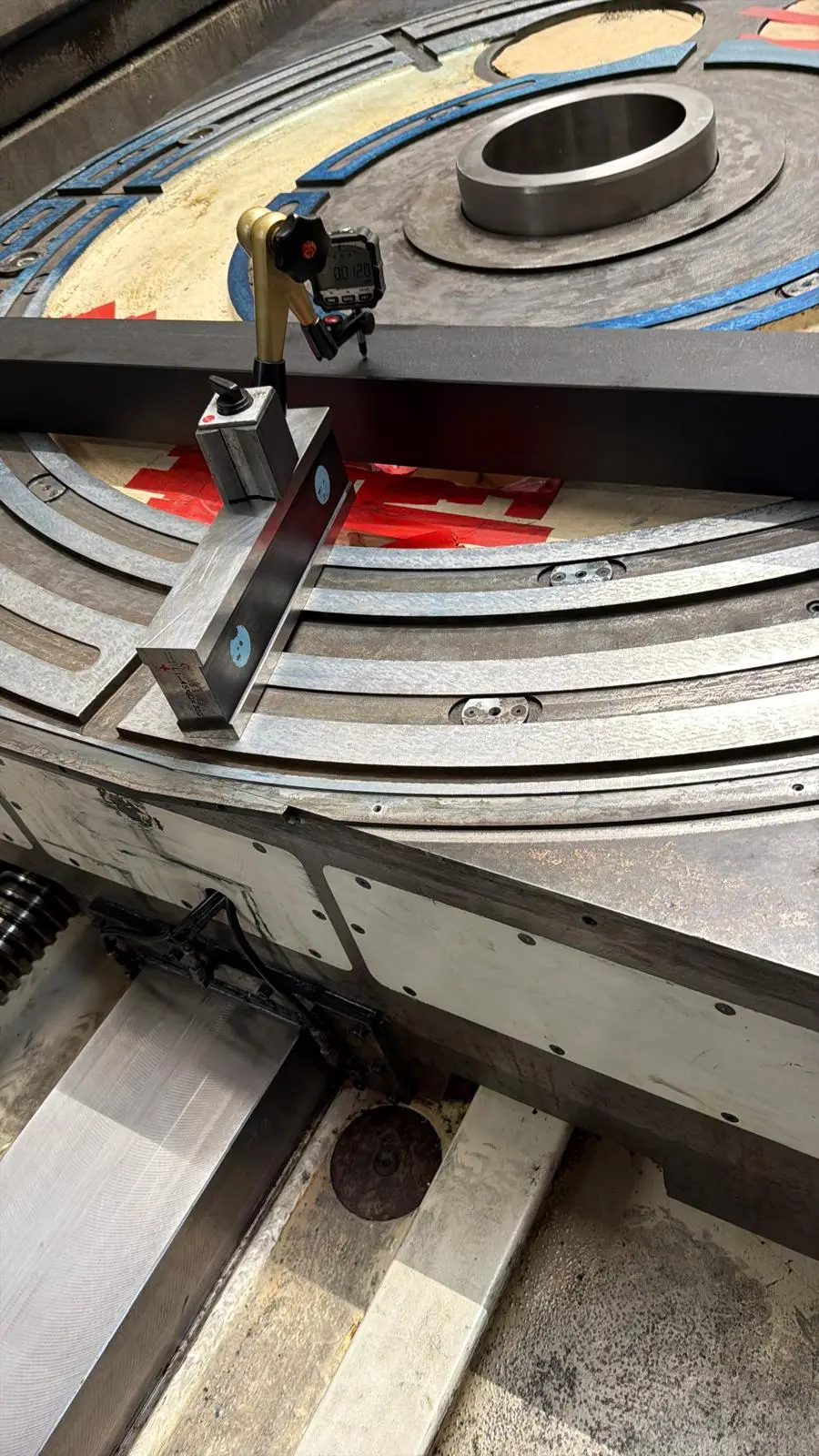
Before the first stroke, the precision straightedge lies on the way with the levels on top, and the dial indicator runs along the mating way. The spotting and the readings show where the way has worn low and how much material has to come off.
Scraping
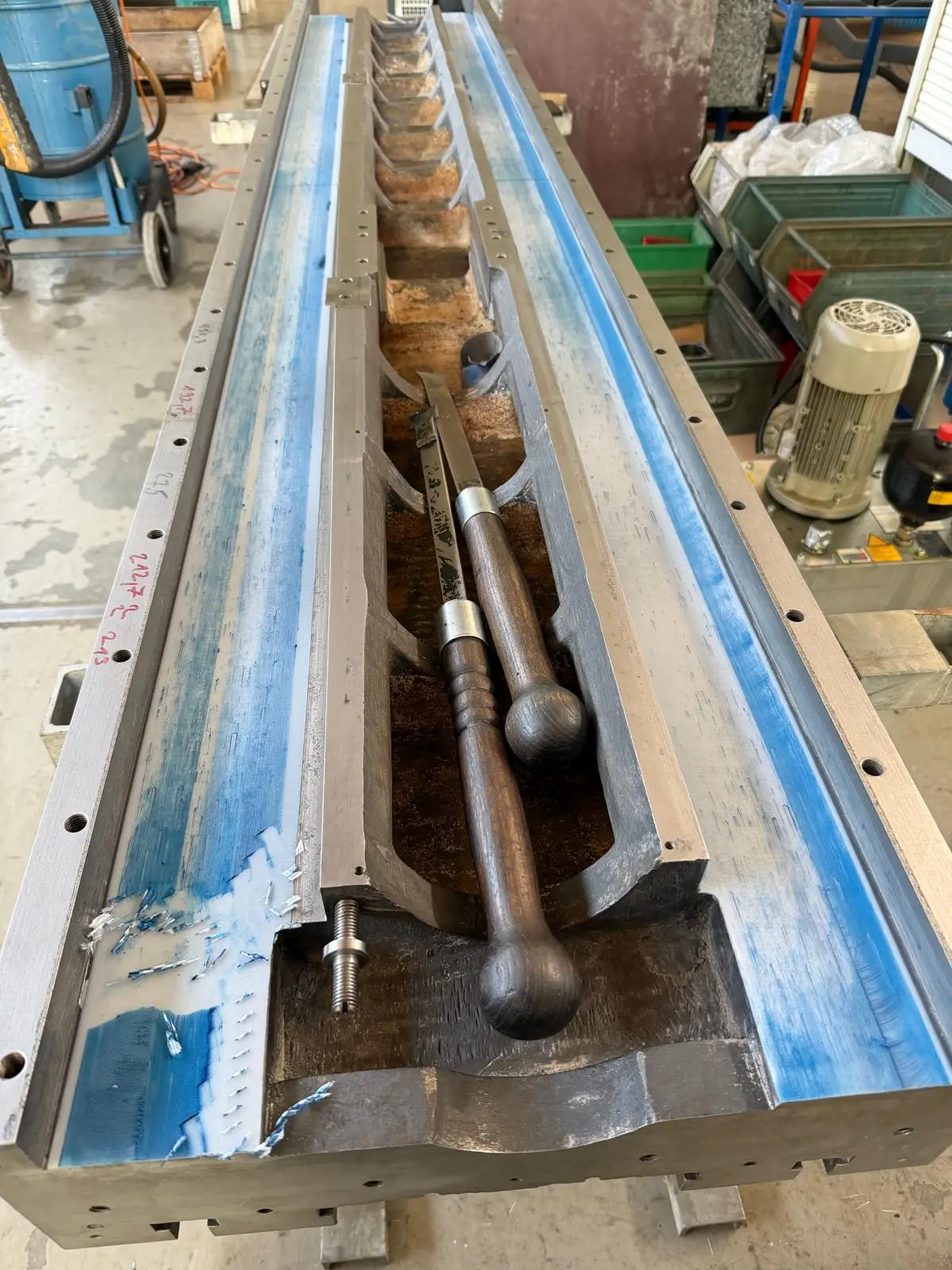
I scrape by hand against the spotting. After every pass the way is spotted again, until the spots are spread evenly across the surface.
Sign-off
After the work I measure the same geometry again. You get the spotting and the readings as an inspection report.
What the job includes
- Way measured with spotting blue, electronic level and dial indicator
- Rescraped by hand against the spotting
- Gib adjusted to the reworked way
- Inspection report with the readings before and after the work
When do machine ways need repair?
Chatter marks
Regular waves on the part, even though speed, feed and tool are right. They show first where the saddle spends most of its time.
Stick-slip
The saddle sticks and then jumps instead of starting smoothly, most clearly at slow feeds and small infeeds.
Size won’t hold
Size drifts along the table, in the same direction on every part.
Play in the gib
The gib is adjusted all the way in, and the saddle still has play. That goes for flat ways as well as dovetail ways.
Frequently asked questions
1. Does the machine have to be torn down to repair the way?
No. I measure and scrape the way in the installed machine, at your plant, worldwide. A bed that is already out of the machine I repair in my workshop in Mühlacker.
2. On which machines do you repair ways?
On surface and cylindrical grinders, milling machines and lathes. I repair flat ways as well as dovetail ways.
3. What does machine way repair cost?
The price is agreed separately for each machine. There is no price list. Tell me on the phone which machine it is and what it is doing.